
Overview of the Laughing Dove
The male laughing dove is easy to recognize by its distinctive cooing, especially when courting. This soft vocalization, made by inflating the neck, is a familiar sound directed toward its mate.
Compared to the more powerful call of the Oriental Turtle Dove, the laughing dove’s gentle sound is one reason it’s a popular choice as a domestic bird.
As pets, laughing doves thrive with a varied diet that includes fruits (in moderation) and spacious environments, making large aviaries ideal. They adapt well to being raised freely if provided with a safe space, like wooden boxes for nesting and feeding.
Quick Facts
- Scientific name: Spilopelia senegalensis
- Weight: 150-196g (male); 125-196g (female)
- Length: 25-27 cm
- Wingspan: 40-45 cm
- Lifespan: 5-10 years
- Diet: Primarily seeds, occasionally insects
- Habitat: Urban areas with dense hedges
- Threats: Food and sport hunting, pet trade trapping
While laughing doves face some threats, their wide distribution and adaptability help sustain their numbers. Occasionally, they may face predators such as rats that target eggs in fruit trees, but once hatched, young doves have high survival rates.

Appearance
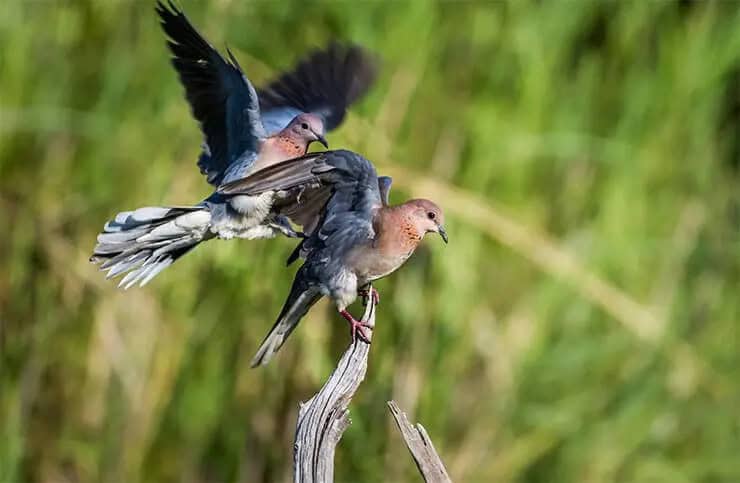
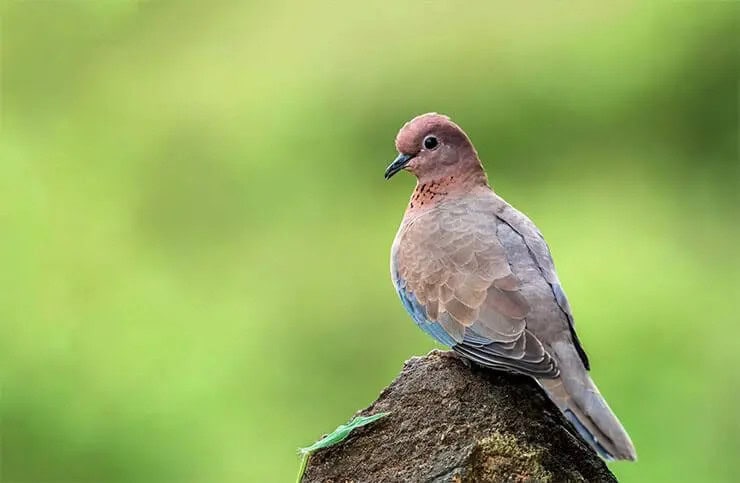
The laughing dove is smaller than the Eurasian Collared Dove. Its head, chest, and upper belly are a deep pink, complemented by a reddish collar speckled with black. With brown upper parts, grey-blue wings, and a dark tail edged in white, its distinctive colors are visible during its fluttering flight.
Range and Habitat
Laughing doves inhabit sub-Saharan and North Africa, parts of the Arabian Peninsula, the Middle East, and India. They have also been introduced to areas like Turkey, Malta, and Western Australia.
Five subspecies exist, with four in Africa and one in Asia, all featuring slightly different color variations, including vivid copper-red and purplish-pink plumage.
Diet and Feeding Habits
Primarily seed-eaters, laughing doves forage on the ground in fields of millet and wheat. Occasionally, they supplement their diet with small invertebrates like snails and insects, showing adaptability in food choice.
Mating and Nesting
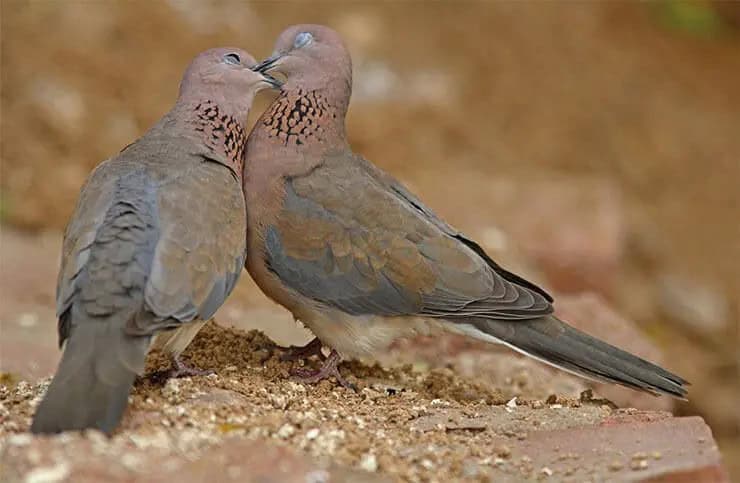
Known for forming lifelong bonds, laughing doves display unique courtship behaviors, including rapid bowing by the male to showcase his collar. Mating rituals involve mutual beak grooming before nest-building in trees or sheltered structures.
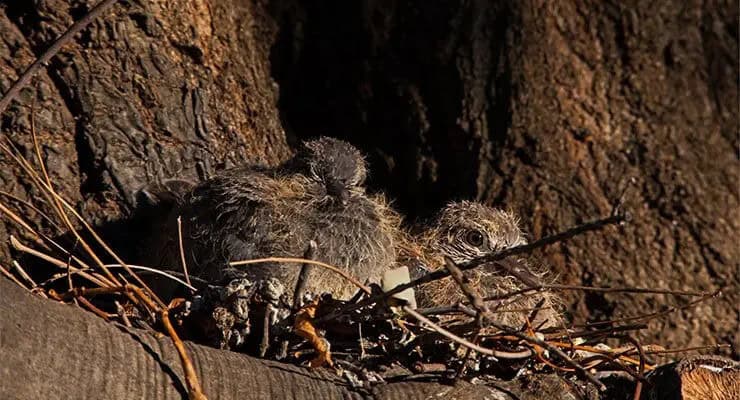
Typically, females lay two eggs, which are incubated by the male during the day and the female at night for 13-15 days.

Conservation Status
With a range covering approximately 64 million square kilometers and an estimated population of 2.5 to 8.3 million, the laughing dove’s numbers are stable across its extensive habitat. As such, the IUCN Red List categorizes it as “Least Concern,” indicating that it faces no immediate risk of decline.
Read More Birds