
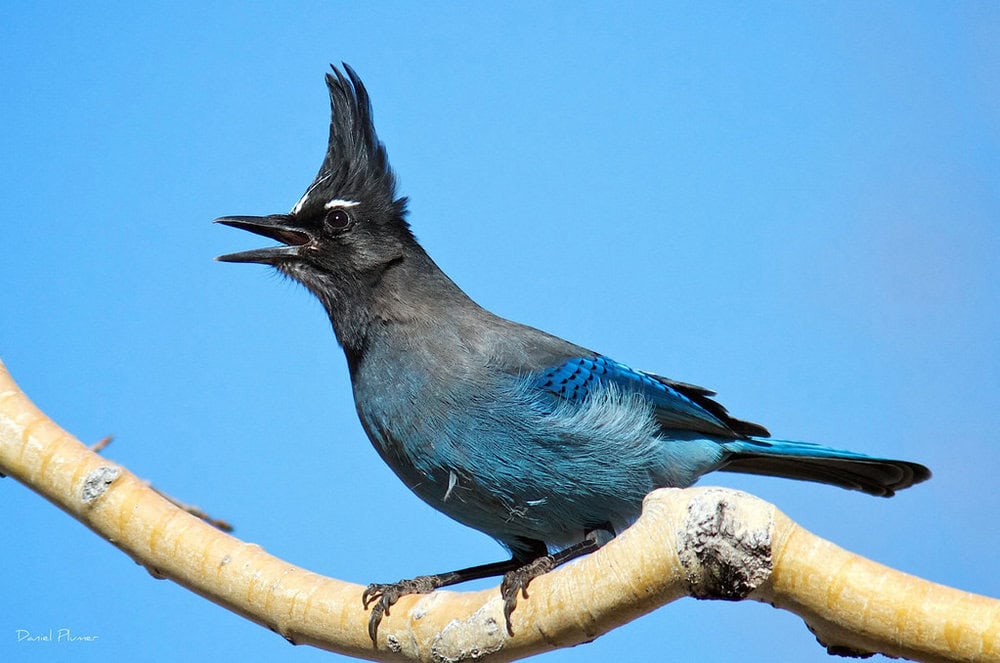
The Steller’s jay, recognized by its bold black-and-blue plumage and distinct triangular crest, is a familiar sight across the western regions of North America. Known scientifically as Cyanocitta stelleri, this jay is closely related to the Blue Jay but is darker, lacking the bright white underparts found in other jay species.
If you prefer not to read the full story,
Skip ahead to watch the video ->
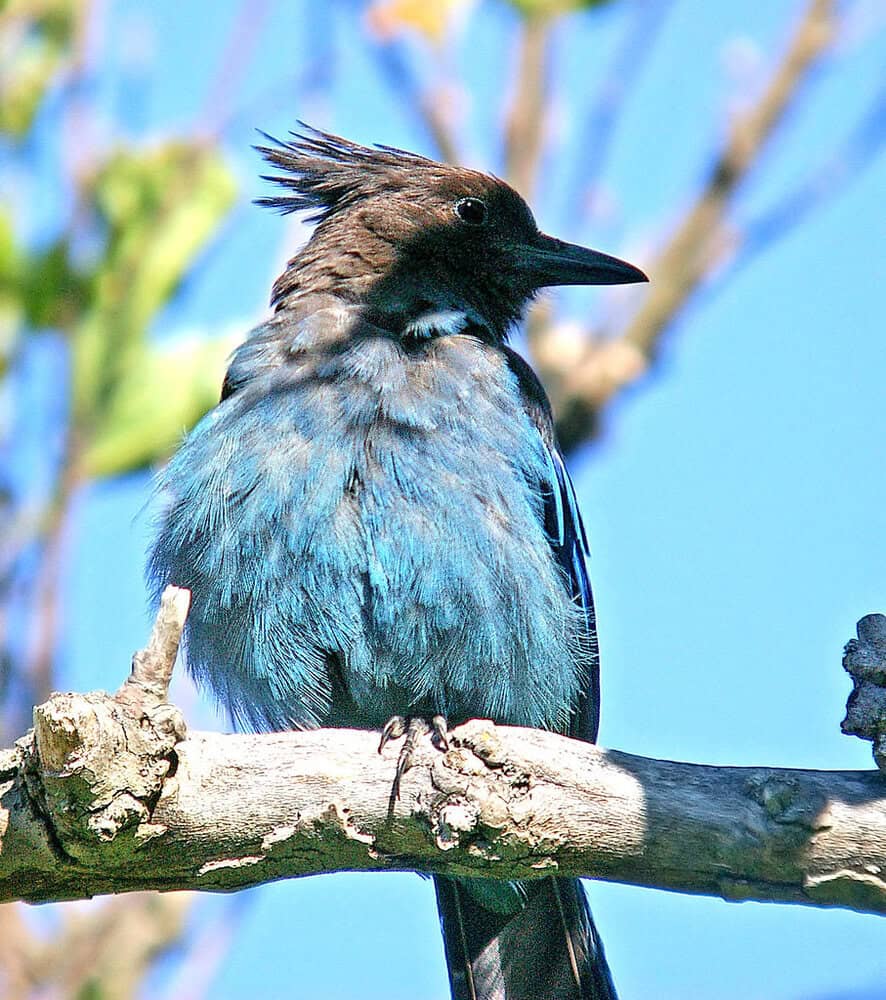
Its head is almost entirely black, extending down the back, while the rest of its body is a rich blue. With a slender yet powerful beak and a prominent crest that stands straight up, this songbird has a unique appearance that distinguishes it from others.
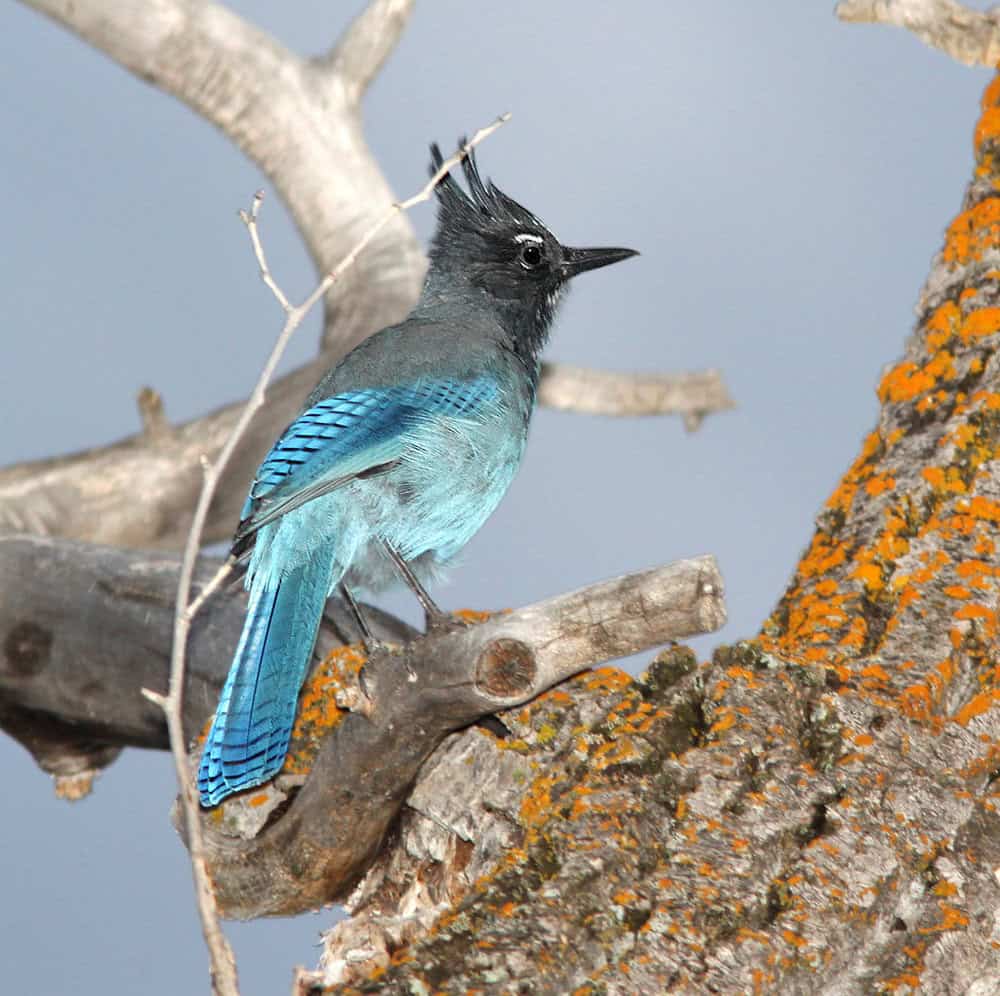
Native to western North America, the Steller’s jay inhabits coniferous forests from Alaska to Nicaragua. While they are common in North Idaho, these jays are also found in residential and agricultural areas near forested lands.
Although they primarily prefer coniferous environments, they can adapt to other forest types and are seen at various elevations, sometimes even reaching the tree line.

As omnivores, Steller’s jays have a diet of about two-thirds plant material and one-third animal matter. They forage both on the ground and in trees, eating various seeds, nuts, berries, and fruits.
They also consume invertebrates, small rodents, eggs, and nestlings, and there are occasional accounts of them eating small reptiles like snakes and lizards.
Steller’s jays are typically monogamous and are believed to mate for life. During the breeding season, pairs engage in courtship feeding and nest-building.
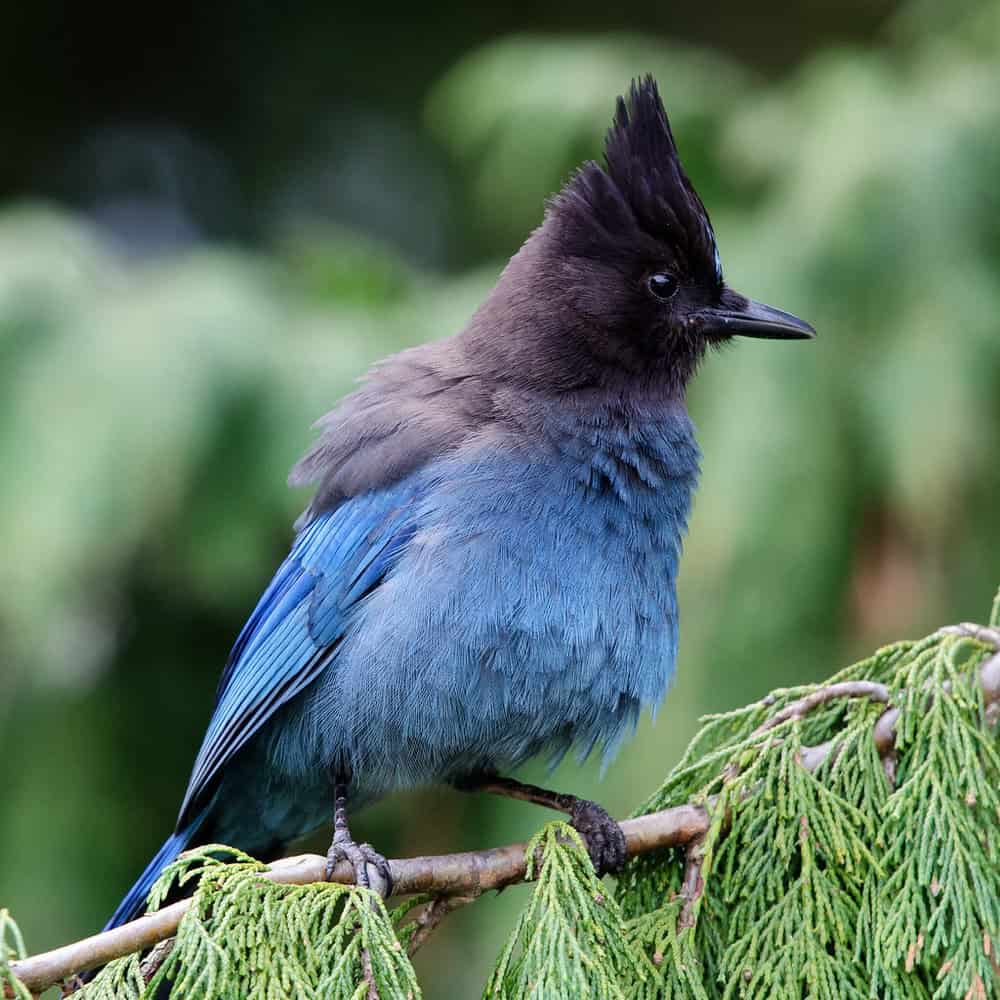
The nests, usually located in conifers but sometimes found in tree hollows or under awnings, are constructed from scavenged natural materials and, at times, small pieces of trash.
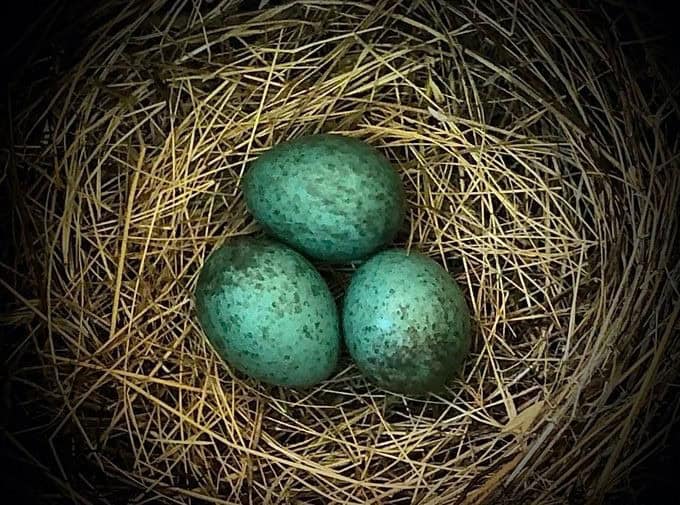
The female incubates a clutch of two to six glossy, greenish-blue eggs with brown speckles for around 16 days, with the male providing food for her during this period.
The Steller’s jay often mingles with other jay species, like the California scrub jay, and is classified as “Least Concern” on the IUCN Red List due to its widespread range and stable population.


Read More Birds