
The red-crested pochard (Netta rufina) is a large, distinctive duck known for the male’s vibrant, rust-colored crest. This species has a notable fossil history across Europe and Asia dating back to the Lower Pleistocene.
Recent fossil evidence even suggests the bird was part of early human settlements as far back as 9,000 years ago. Today, the red-crested pochard remains a fascinating sight in Eurasian wetlands.
Identifying Features
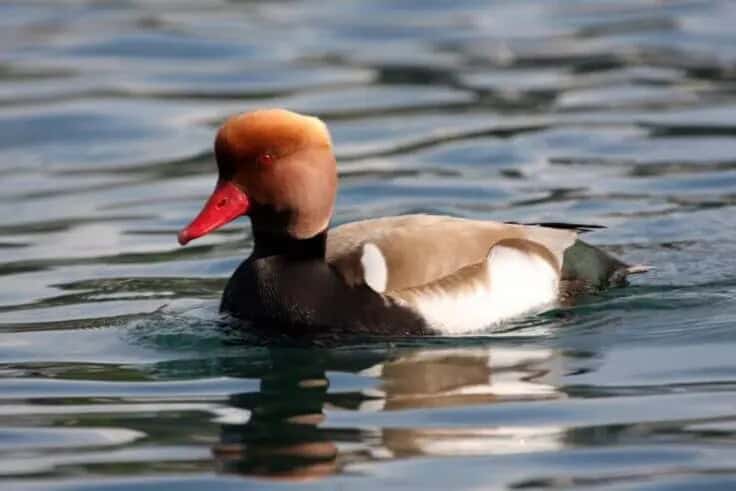
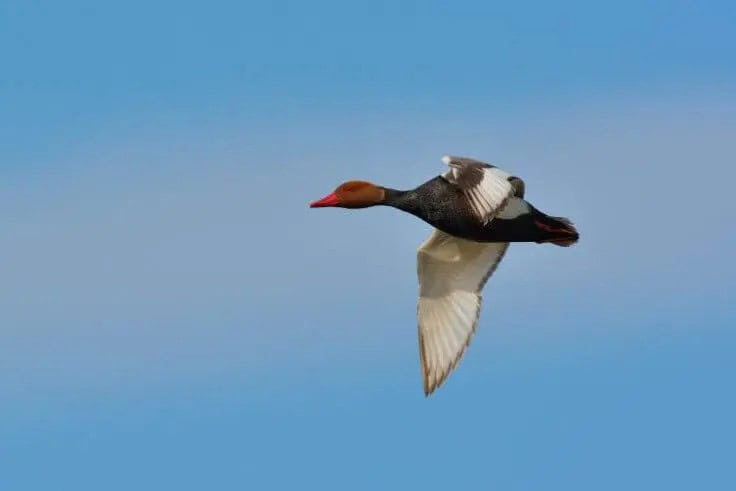
The adult male red-crested pochard is known for its bold look, bright red eyes, a rosy-red bill, and striking black breast and tail. Its rounded head and plump body make its white wing stripes easily visible during flight.
The female sports a more subdued look, with brownish-buff plumage, pale cheeks, a dark cap, and a black bill, which sets her apart from the colorful male.
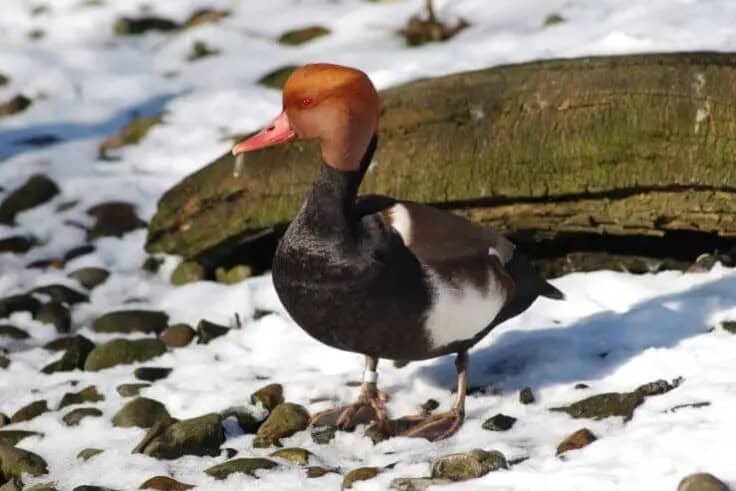
Although the red-crested pochard’s appearance is unique, it can be mistaken for other species, such as the common pochard, the ruddy duck, and the white-headed duck.
Occasionally, the critically endangered pink-headed duck has been misidentified as a red-crested pochard, though subtle differences in plumage help distinguish them.
Vocalizations and Communication
Generally quiet, the red-crested pochard becomes more vocal during the breeding season. Males produce a croaking sound along with various multi-note calls, while females are known for their simple one-note calls and a three-part bark, similar to other dabbling duck species.

Range and Migration
This species breeds across Europe and Asia, stretching from the British Isles to parts of China. They typically spend winters in Europe and Asia, especially in regions such as France, Germany, and Central Asia, and have been spotted as far as North Africa. Established populations have also been noted in the United Kingdom since the mid-20th century.
Habitat and Nesting
Red-crested pochards favor well-vegetated wetlands, slow rivers, and lagoons surrounded by reeds and shrubs. Initially drawn to brackish water, the species gradually shifted to freshwater habitats to avoid competition and predation from other bird species.
During the breeding season, pairs construct hidden nests in thick vegetation or use old nests from other waterbirds. The female lays 6–12 eggs, which she incubates for about 28 days. Ducklings, covered in down upon hatching, are ready to fly in 45 to 80 days and generally start breeding by their second year.
Diet and Feeding Behavior
Primarily herbivorous, the red-crested pochard consumes a mix of algae and submerged plants in the summer, adding seeds and grasses to its diet in winter. Unlike most diving ducks, red-crested pochards often feed like dabbling ducks, foraging at the water’s surface or upending to reach food.
They may occasionally steal food from other waterfowl but are also observed sharing food within mated pairs.
Conservation Status and Threats
Although the red-crested pochard faces threats from hunting, lead poisoning, and habitat destruction, it is currently classified as “Least Concern” by the IUCN due to its wide range. However, localized populations are declining, likely due to wetland pollution and drainage.
Conservation and Future Outlook
The red-crested pochard contributes to the dispersal of aquatic plant seeds across its habitats. Conservation of wetland ecosystems is vital for this species’ continued survival, as their dependence on these environments leaves them vulnerable to habitat loss.
Protecting these wetlands not only supports the red-crested pochard but also strengthens the broader ecosystem they inhabit.
Read More Birds