
Maine’s rich landscapes and flourishing wildflowers make it an ideal habitat for a charming array of hummingbirds. Known for their dazzling colors and impressive flight skills, these tiny aviators captivate birdwatchers and nature lovers alike.
Maine is primarily home to the Ruby-Throated Hummingbird, but on occasion, rare visitors like the Rufous and Calliope Hummingbirds grace the state with their vibrant presence.
1. Ruby-Throated Hummingbird
Scientific Name: Archilochus colubris
Lifespan: 3-5 years
Size: 3-3.75 in (7.6-9.5 cm)
Weight: 0.07–0.21 oz (2-6 g)
Wingspan: 3.1-4.3 in (7.9–10.9 cm)
Status: Least Concern
State Status: Common and breeding
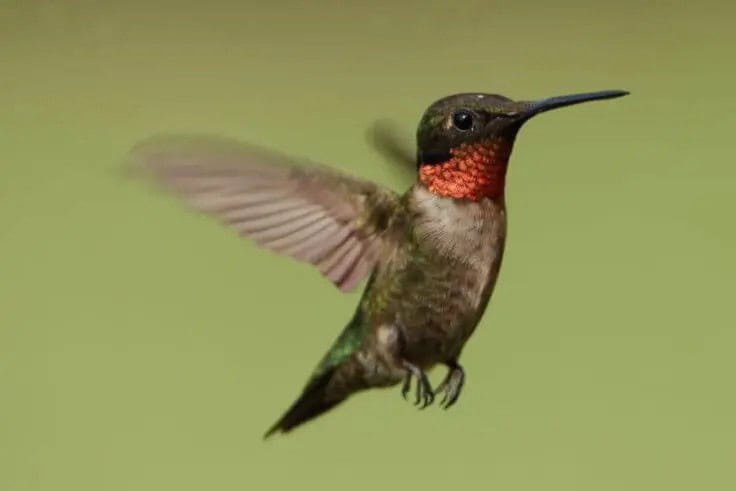
The Ruby-Throated Hummingbird, the most widespread species in the eastern United States, is well-known for its stunning green back and the male’s iridescent red throat. The females are slightly muted, displaying a white throat and a softer green color overall.
These agile fliers hover and dart among flowers, adding bursts of color to Maine’s gardens and forests. Their meticulous nests, woven by the female using plant fibers, spider silk, and lichens, are perfectly camouflaged to protect their young.
In addition to nectar from brightly colored flowers, Ruby-Throated Hummingbirds consume insects and spiders, which supply essential nutrients. Conservation initiatives, like those led by the Audubon Society, have helped stabilize their populations, ensuring these beautiful birds continue to thrive.

2. Calliope Hummingbird
Scientific Name: Selasphorus calliope
Lifespan: 3-7 years
Size: 2.75-3.25 in (7.0–8.3 cm)
Weight: 0.07–0.21 oz (2-6 g)
Wingspan: 3.5-4.3 in (8.9–10.9 cm)
Status: Least Concern
State Status: Migratory and rare
The Calliope Hummingbird, the smallest breeding bird in the United States, is occasionally spotted in Maine during migration. Males are recognized by their radiant magenta streaks, while females have a more subdued greenish-brown appearance.
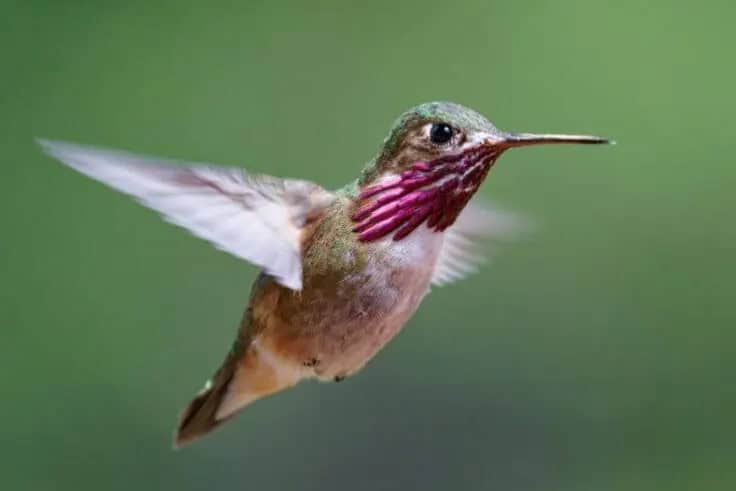
Despite their size, Calliope Hummingbirds are known for their boldness, often engaging in aerial displays to defend feeding areas. They build tiny nests in protected areas, such as dense shrubs, ensuring safe and accessible feeding sources for their young.
3. Rufous Hummingbird
Scientific Name: Selasphorus rufus
Lifespan: 3-5 years
Size: 2.75-3.75 in (7.0–9.5 cm)
Weight: 0.09–0.16 oz (2.5–4.5 g)
Wingspan: 3.5-4.3 in (8.9–10.9 cm)
Status: Least Concern
State Status: Migratory and rare
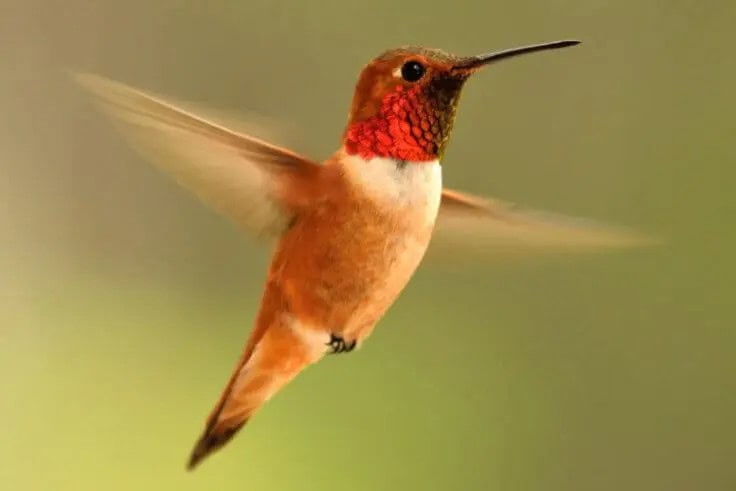
Recognized by their vivid rusty-orange coloring, Rufous Hummingbirds are feisty travelers with one of the longest migration paths of any hummingbird, stretching from Alaska to Mexico. Their visits to Maine are rare but notable.
Rufous Hummingbirds are fiercely territorial, often defending their feeding grounds from other birds. Conservation efforts, including habitat preservation and promoting native plants, help support their populations.
Where to Spot Hummingbirds in Maine
For the best hummingbird sightings, visit areas with plentiful flowering plants and feeders, especially at dawn or dusk. Acadia National Park offers great viewing opportunities, particularly around the Wild Gardens of Acadia.
Gilsland Farm Audubon Center in Falmouth, the Fore River Sanctuary in Portland, and Moosehorn National Wildlife Refuge in Baring are prime locations.
Bring binoculars and a camera to maximize your chances, and look for bright-colored blooms. Backyard feeders with sugar water can also attract hummingbirds. Watching these agile birds flit from flower to flower is a rewarding experience for any nature enthusiast.
Final Thoughts
From the common Ruby-Throated to the rare Rufous and Calliope, Maine’s hummingbirds bring a vibrant splash of life to the state’s landscapes. Their unique behaviors and essential role in pollination underscore the need for conservation efforts.
Observing these delicate wonders is a reminder of Maine’s rich biodiversity and the importance of preserving it for future generations.
Read More Birds