
Falcons are some of Iowa’s most captivating birds of prey, known for their impressive speed and agility. They soar through the state’s skies, adding beauty and strength to Iowa’s natural landscape.
Despite being often associated with mountains and deserts, falcons thrive here, especially in the wide-open spaces, river areas, and even bustling urban centers.
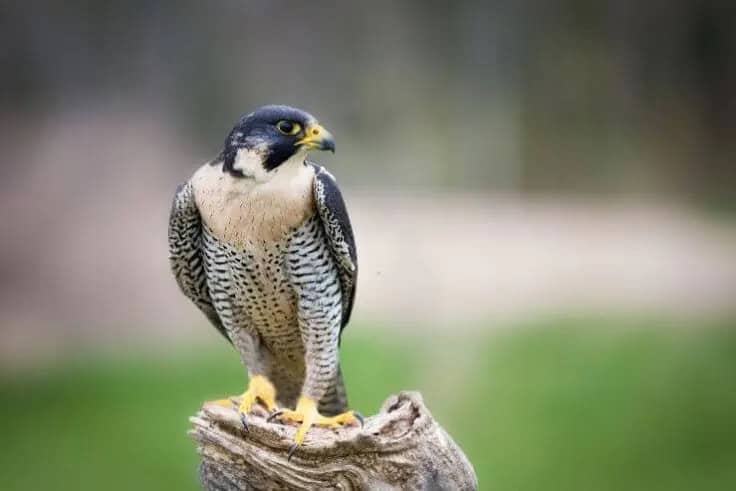
The peregrine falcon is a conservation success story among the falcons in Iowa. Once endangered, this resilient bird has made a remarkable recovery and now calls cities like Des Moines and Cedar Rapids home.
Spotting a falcon diving at incredible speeds or listening to its piercing call offers a powerful connection to Iowa’s wild side. Whether you’re a birdwatching enthusiast or simply curious about local wildlife, understanding these raptors’ role enriches our appreciation of the natural wonders around us.
1. Peregrine Falcon
- Scientific Name: Falco peregrinus
- Lifespan: 8-15 years
- Size: 14-19 inches (36-48 cm)
- Weight: 1.1-3.3 pounds (500-1500 grams)
- Wingspan: 3-4 feet (90-120 cm)
- Status: Least Concern
- State Status: Breeding and rare
Peregrine Falcons are among the most iconic birds of prey, renowned for their incredible speed and adaptability. With slate-blue wings, a dark back, and distinctive “mustache” facial markings, peregrines boast a sleek, aerodynamic body that can reach dive speeds of over 200 miles per hour, making them the fastest animals on Earth.
These falcons typically choose high, isolated perches, such as cliffs or skyscrapers, for nesting. In Iowa, they have adapted well to urban environments, nesting on high-rise buildings for protection from predators and proximity to food sources like pigeons and songbirds.
After their decline in the mid-20th century due to DDT pesticides, intensive conservation efforts helped them rebound. By the 1990s, peregrines were reintroduced to Iowa, where they’ve flourished in urban areas. Continued monitoring and education efforts help preserve these stunning birds for future generations.
2. American Kestrel
- Scientific Name: Falco sparverius
- Lifespan: 5-10 years
- Size: 8-12 inches (20-30 cm)
- Weight: 2.8-5.8 ounces (80-164 grams)
- Wingspan: 20-24 inches (51-61 cm)
- Status: Least Concern
- State Status: Breeding and common
Small but striking, the American Kestrel is North America’s tiniest falcon. Despite its size, it captures attention with vibrant colors and distinctive markings.
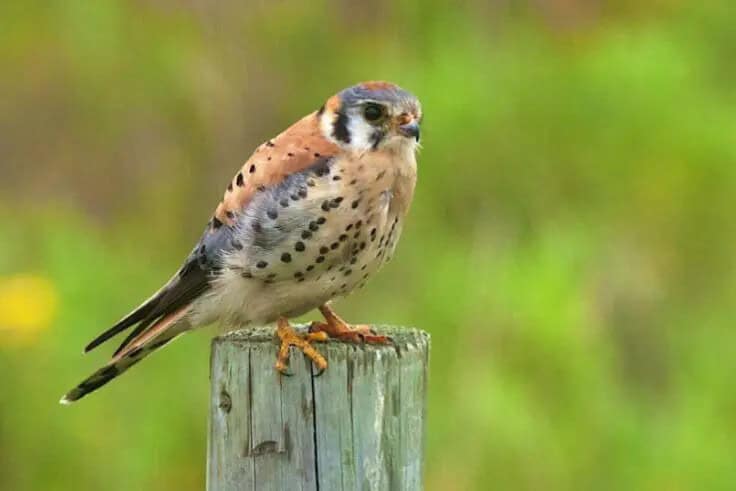
Kestrels thrive in various habitats, including Iowa’s open fields and even urban areas, where they hunt insects, small mammals, and birds. Their diet plays a helpful role in agricultural pest control, making kestrels valuable to the local ecosystem.
Though the species faces challenges like habitat loss, local conservation programs and nest box installations have helped maintain their population in Iowa.
3. Merlin
- Scientific Name: Falco columbarius
- Lifespan: 5-10 years
- Size: 9-11 inches (23-28 cm)
- Weight: 5-7 ounces (140-198 grams)
- Wingspan: 20-26 inches (51-66 cm)
- Status: Least Concern
- State Status: Migratory and rare
Merlins are powerful yet compact falcons known for their agile flight and sharp hunting skills. They breed in northern forests and migrate south, passing through Iowa during migration.
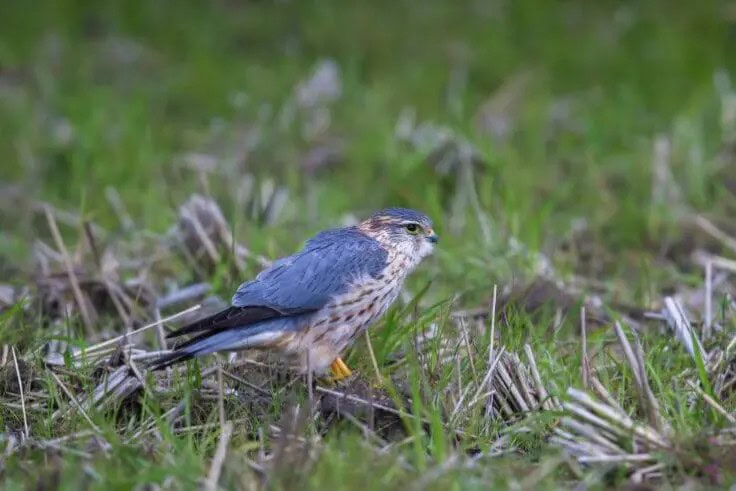
These birds of prey have a diet centered on small birds and large insects. With their fierce nature and intense hunting style, Merlins are a thrilling sight for birdwatchers visiting Iowa.
Efforts to protect natural habitats and reduce pesticide use have been essential to Merlin’s recovery, and ongoing tracking programs aim to support their continued presence.
Where to Spot Falcons in Iowa
For falcon sightings in Iowa, head to open areas and tall structures. With its prairies and bluffs, the Loess Hills in western Iowa is a prime location for spotting falcons. Effigy Mounds National Monument along the Mississippi River also provides ideal peregrine nesting grounds.
In urban areas like Des Moines and Cedar Rapids, peregrines often nest on tall buildings, where you might see them hunting pigeons or other birds.
For a riverside view, Pikes Peak State Park offers great chances to see falcons soaring along the Mississippi. Bring binoculars and find a quiet spot for the best birdwatching experience!
Conclusion
Falcons play a vital role in Iowa’s wildlife, each species bringing unique characteristics to the state’s ecosystem.
From the Peregrine Falcon’s high-speed dives to the American Kestrel’s pest control and the Merlin’s swift agility, these birds of prey remind us of the beauty and balance of Iowa’s natural world.
By continuing conservation efforts, we ensure that these magnificent raptors remain part of Iowa’s heritage for generations.
Read More Birds