
Native to Australia, the budgerigar is a popular pet in Europe, known for its vibrant feathers and sociable nature. This lively bird, part of the parrot family, is rarely found alone in the wild, often forming flocks of up to 2,000 birds.
For those considering adopting a budgerigar, it’s best to have at least two or more, as they thrive in company and constant interaction. These birds are expressive, with distinctive chirping sounds and unique body language, making them fascinating companions.

Highly intelligent and active, the budgerigar, or budgie, doesn’t sing in the traditional sense but produces pleasant chirps. Adaptable and affectionate, budgerigars are known to bond well with humans.
They enjoy interacting with their owners, often landing on shoulders or hands and making short flights around the room. With consistent care and attention, they can build a trusting relationship with their human companions.
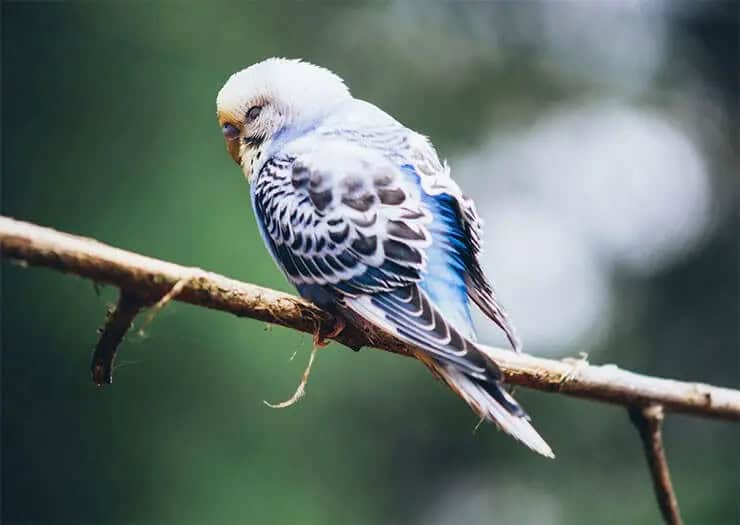
Budgies can even be taught simple words and phrases if exposed to regular verbal interaction. When welcoming a budgerigar into a new environment, a short period of quiet adjustment helps them feel at ease.
Moving slowly around their cage, avoiding loud noises, and giving them fresh food and water daily are important for building trust. Gradually, the bird can be encouraged to respond to its name and engage in gentle contact.
Budgerigar Facts
- Scientific name: Melopsittacus undulatus
- Weight: 22-32 g
- Length: 18-20 cm
- Wingspan: Approximately 30 cm
- Lifespan: 7-15 years
- Diet: Seeds, fruits, vegetables, and occasionally insects
- Habitat: Open scrublands, grasslands, and woodlands in Australia
- Threats: Feral cats, climate extremes, habitat loss from wildfires and farming
Physical Characteristics
Budgerigars reach up to 20 cm in length and come in various colors, including green, blue, yellow, and grey. Certain varieties feature intricate wave-like patterns on their head and neck.

Sex can be identified by the color of the waxy area above the beak—blue in males, brown in females—after they reach six months of age.
Habitat and Distribution
In the wild, budgerigars are found throughout mainland Australia, except for the Cape York Peninsula, where they inhabit semi-desert grasslands and forests. Small populations of escaped budgerigars have also established colonies in parts of Brazil, Colombia, South Africa, California, and Florida.
Diet and Feeding
Budgerigars prefer small, mature seeds in the wild, but in captivity, they enjoy a mix of seeds, green vegetables, fruits, and the occasional insect. Chicks are fed larvae and worms to support growth. Owners should provide a balanced diet, including fruits and leafy greens, to ensure their health.

Breeding
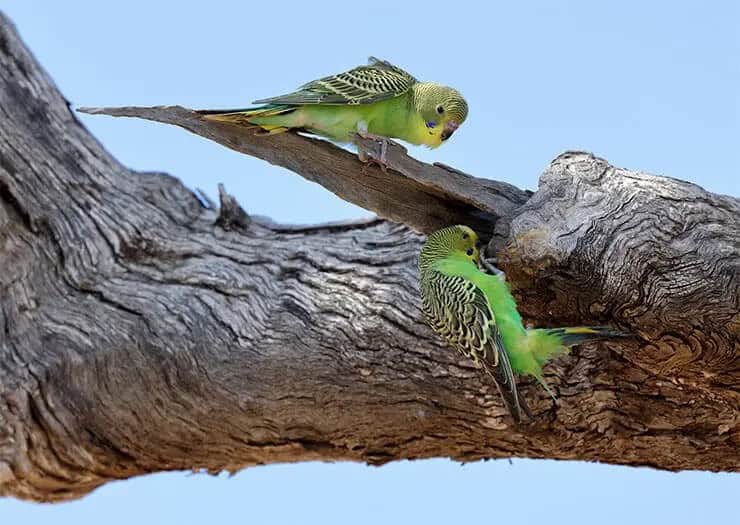
The breeding season typically aligns with food availability, usually in spring and summer. Female budgerigars, aged at least 10-11 months, nest in tree trunks and lay 4-8 eggs, which they incubate for about 17-20 days.
The mother feeds the young for the first month, after which the father takes over until weaning is complete. In captivity, breeding in colonies is not recommended due to females’ territorial instincts.
Conservation
Despite challenges from habitat destruction, budgerigars have adapted to changes across Australia, aided by new water sources from dam construction. While feral cats pose the greatest threat, habitat loss from farming, wildfires, and extreme temperatures also impacts budgerigar populations.
Read More Birds
