
The ostrich family is part of a unique group of flightless birds known as ‘ratites,’ which includes around 60 species, such as rheas, emus, kiwis, penguins, and cassowaries.
Somali Ostriches, a distinct family member, share a common ancestry with the Common Ostrich (Struthio camelus) but have several unique traits.

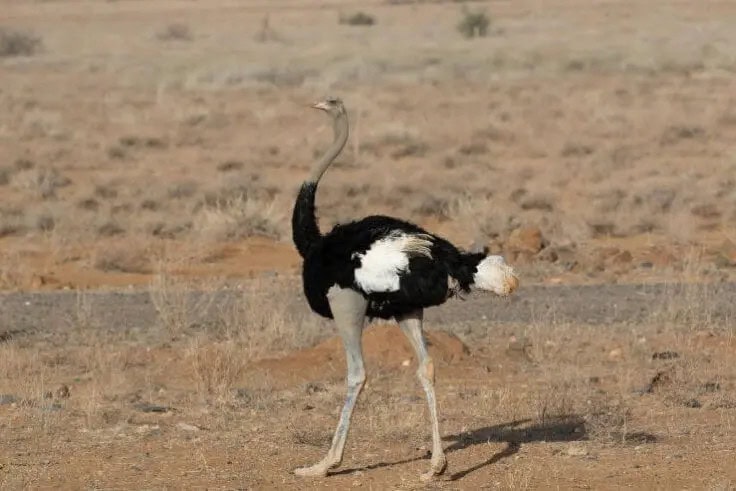
Unlike the Common Ostrich, which has pink necks and legs, Somali Ostriches display a striking blue coloration in these areas and were officially recognized as a separate species in 2014 after genetic studies.
Identification
Somali Ostriches are notable for their impressive size, reaching heights of up to 2 meters and weighing over 100 kilograms, making them one of the most giant birds.
With long legs and necks, they are highly social and can be seen in pairs or small groups. Their diet mainly consists of plants, but they also eat insects and small vertebrates when necessary.
This species is distinguishable by its blue neck and thighs, which become even more vibrant during the breeding season. Males have mostly black feathers with white tail feathers, while females are brown with grey beaks and legs for effective camouflage.
Somali Ostriches’ large eyes, among the biggest of any land vertebrate, help them detect predators from afar, and they have long eyelashes to protect their eyes from dust. Their two-toed feet, with one large nail, are essential for defense and digging.
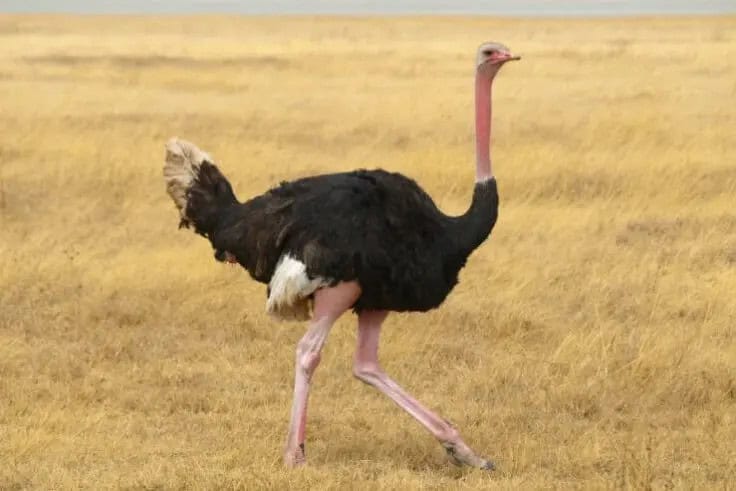
Although flightless, Somali Ostriches have a wingspan of about 2 meters, which helps them with balance and during courtship displays.
Distribution and Habitat
Somali Ostriches inhabit the Horn of Africa, specifically in eastern Ethiopia, northern Kenya, southern Djibouti, and Somalia. They prefer shrublands, grasslands, and occasionally cultivated areas for foraging, contrasting with Common Ostriches, who favor open savannas.
Behavior and Habits
Active during the day, Somali Ostriches can be found alone or in pairs and usually rest in the evening. Known for their speed, they can run up to 70 km/h, allowing them to evade predators like cheetahs.
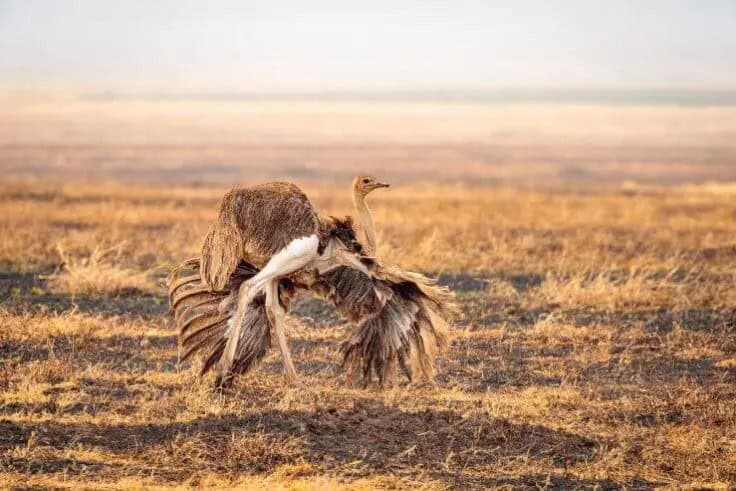
In dangerous situations, they use their coloring and blend with their surroundings, lying low to avoid detection or defend themselves with powerful kicks.
Breeding
Somali Ostriches breed based on environmental factors, with rainy seasons providing the food abundance necessary for raising chicks. They reach maturity within three to four years, and males display bright blue necks and legs as a breeding signal. Their courtship involves males fluffing their feathers and performing movements to attract females.
During nesting, males create communal sites lined with twigs and grass. Females lay around two to five eggs each, with the dominant female’s eggs in the center. The eggs, some of the largest in the bird world, are beige and can weigh up to 1.5 kilograms.
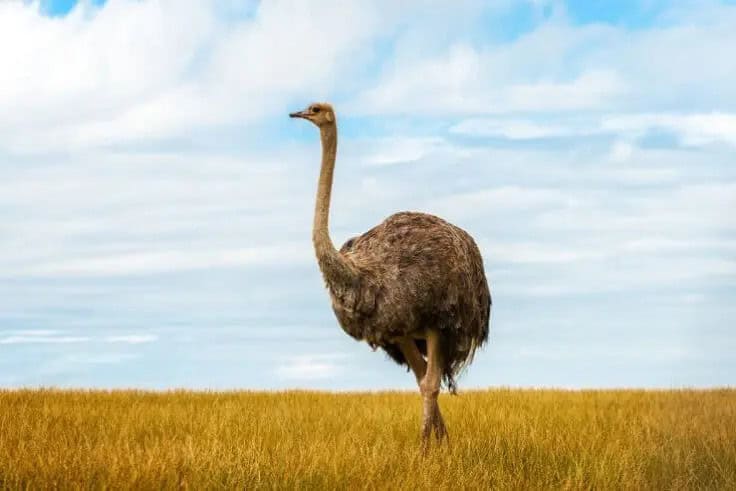
Both parents participate in incubation: females during the day and males at night. Hatchlings emerge after 23 days and reach adult size within a year, often forming groups of up to 50 young birds.
Diet
Somali Ostriches are omnivores, consuming succulents, roots, seeds, and small animals like lizards and rodents. Without teeth, they swallow sand and stones to aid digestion, which helps break down food in their gizzard.
Conservation
Classified as vulnerable by the IUCN, Somali Ostriches face threats from hunting for their feathers, leather, meat, and eggs. Their feathers are often used in fashion and for practical items, while eggshells serve as tools and ornaments.
However, conservation efforts, including commercial farming, have helped prevent extinction. In Kenya, populations of Somali Ostriches are safeguarded within protected areas like Samburu National Park.
History and Evolution
Once considered a subspecies of the Common Ostrich, the Somali Ostrich was recognized as a separate species in 2014. Genetic studies suggest it diverged from the Common Ostrich about 2-3 million years ago.
The Arabian Ostrich, a close relative that once roamed the Arabian Peninsula, became extinct in the 1940s due to hunting and environmental challenges.
Conclusion
With their impressive height and distinct blue coloring, Somali Ostriches are a remarkable sight in the African wilderness. They play a valuable ecological role in the Horn of Africa by helping to manage plant growth and disperse seeds, contributing to local biodiversity.
Read More Birds
