
The Yellowhammer (Emberiza citrinella) is one of Europe’s most common bunting species, thriving in agricultural landscapes with hedges, fields, and meadows. Known for its distinctive, simple song, the male begins its vocal display as early as the start of spring.
In earlier times, traditional farming practices, including horse-drawn plowing, created ideal conditions for the Yellowhammer. However, conservation efforts are crucial for the bird’s survival today, as modern agriculture has significantly changed its preferred habitat.
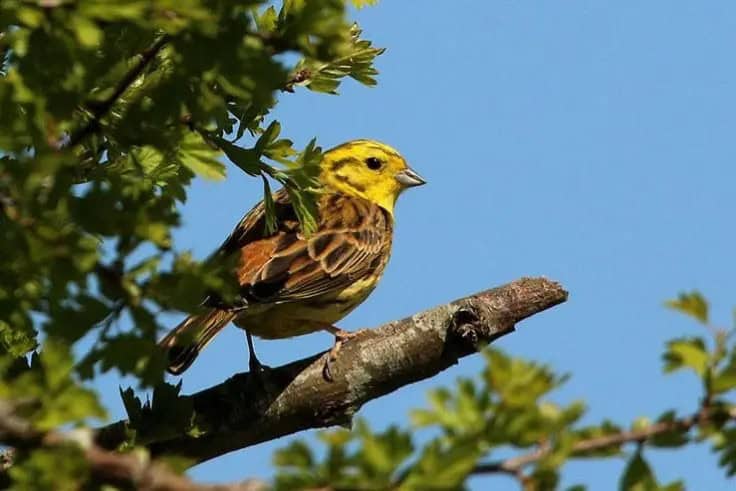
Efforts to preserve these landscapes could play a key role in supporting biodiversity and the Yellowhammer’s future.
Physical Characteristics
The Yellowhammer is known for its vivid plumage. Males have a striking lemon-yellow head and belly, warm brown tones, and reddish hues on their back and rump. Fine black stripes highlight the cheeks and crown, giving this bunting a distinctive look.
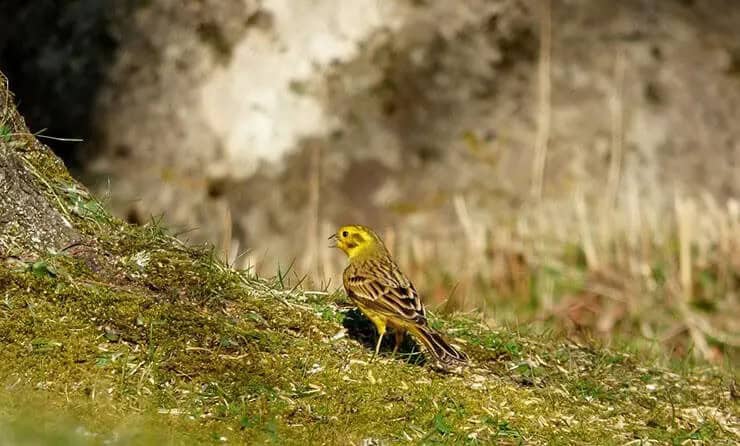
Its sharp beak, bright eyes, and pointed tail add to its unique appearance. A reserved bird by nature, the Yellowhammer is especially noticeable during spring when its metallic song can be heard from high perches.
- Scientific name: Emberiza citrinella
- Weight: 24 – 30 grams
- Wingspan: 23 – 29 cm
- Lifespan: Up to 13 years
- Diet: Seeds and insects
- Habitat: Agricultural areas, forest edges, and uncultivated land
Threats to Survival
The primary threat to the Yellowhammer is the loss of its traditional grassland and shrubland habitats, driven by intensive farming. Increased use of herbicides and pesticides also poses risks, as these chemicals impact nesting and feeding areas.
Appearance by Season and Sex
In summer, adult males display brown upper parts with blackish streaks, a reddish-brown rump, and a dark brown tail. Their heads are mainly yellow, with stripes extending from the beak across the crown and cheeks.
The chest is a light orange-brown on a yellow background, and the legs are light brown with a bluish-grey beak.
Females are similar but less vibrant, with more muted yellow tones and darker brown shades. Juveniles resemble females, while males in winter appear similar to females, though they retain some yellow on their heads.
Geographic Range and Migration
The Yellowhammer is found across Europe and Asia’s boreal and temperate zones, with some populations introduced in Australia and New Zealand. While many of these birds are partially migratory, those in the northernmost regions migrate south in winter.
They favor semi-open environments like bushy farmlands, woodland edges, and even cultivated fields during winter.
Diet and Breeding Behavior
Yellowhammers primarily feed on grass seeds, wild fruits, herbs, and sprouts, though their diet includes insects during the breeding season to support their young. In spring, pairs form, separating from their winter flocks to establish territories and build nests.
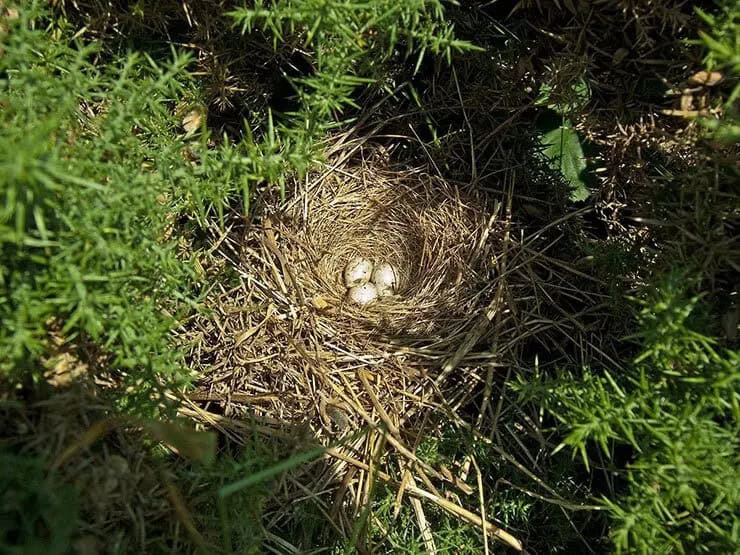
The male performs a courtship display around the female while the female constructs the nest, often on the ground or in low shrubs.
Each season, two broods may be raised between April and July. The female incubates 3-5 eggs for about 12-14 days while the male provides food. After hatching, both parents feed the chicks, who leave the nest after 11-13 days but continue to receive parental care for a few more weeks.
Conservation Status
Birdlife International considers The Yellowhammer stable across Europe, though there has been a noticeable decline in certain parts of the European Union. Habitat loss due to intensified farming and abandoning traditional agricultural methods contribute to this trend.
Although its conservation status is favorable overall, preserving traditional agricultural landscapes could benefit this species.
While the Yellowhammer does not currently face an immediate conservation crisis, efforts to maintain its habitat remain essential. Supporting a balance between agricultural land use and natural landscapes will help sustain this vibrant bird for future generations.
Read More Birds
