
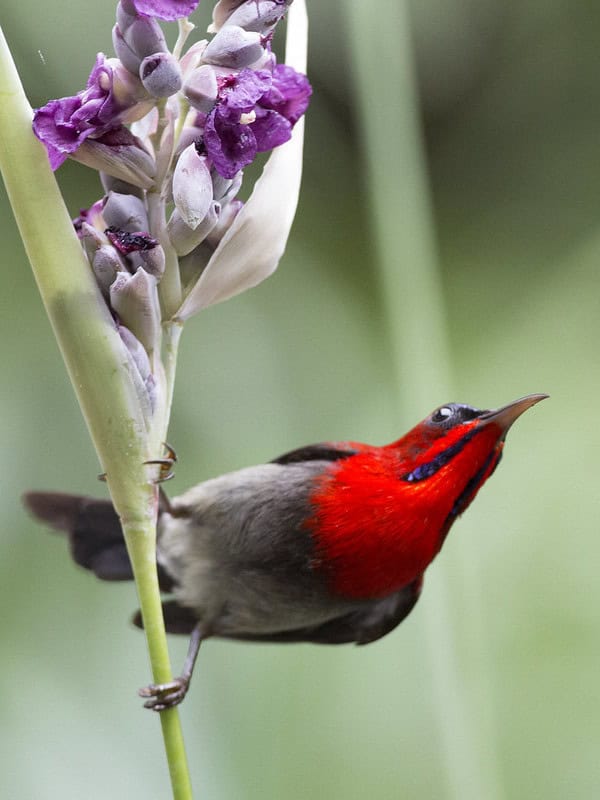
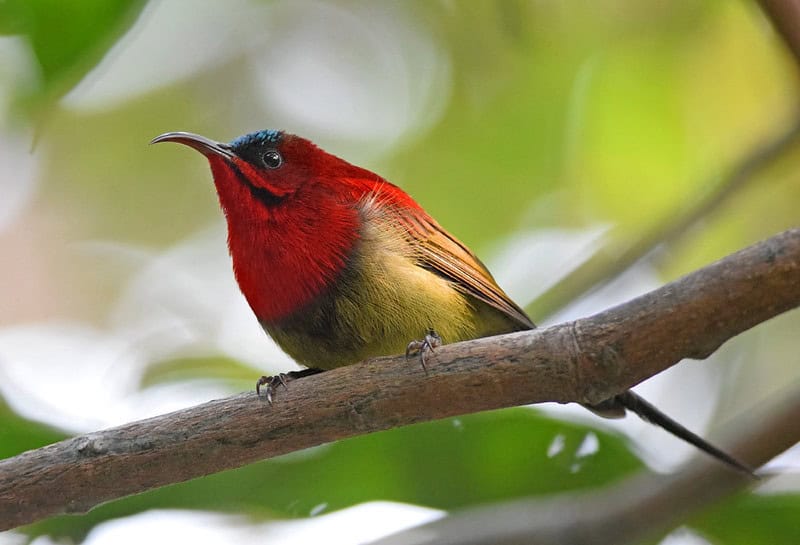
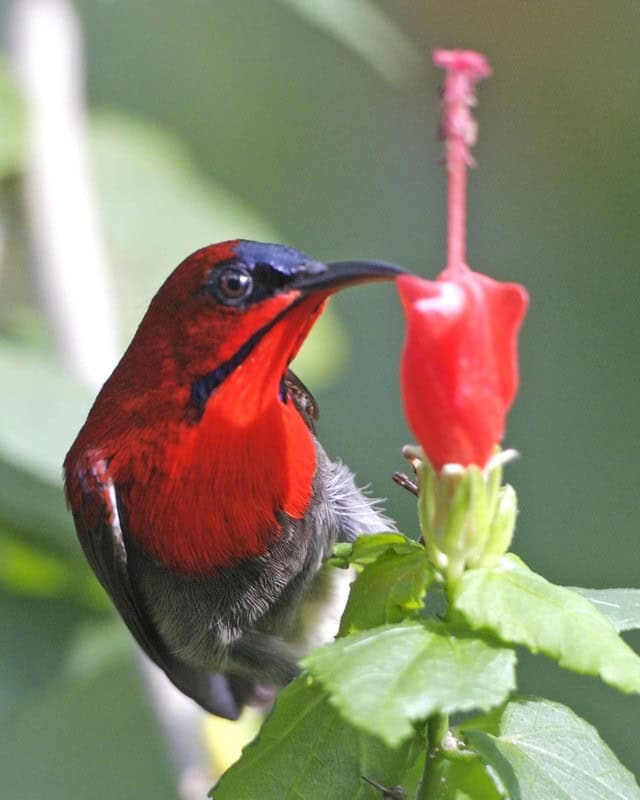
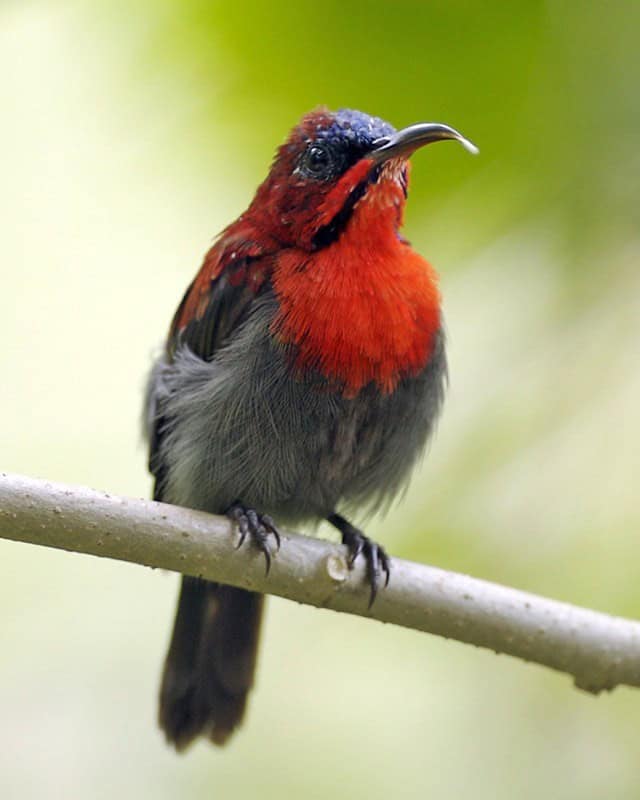
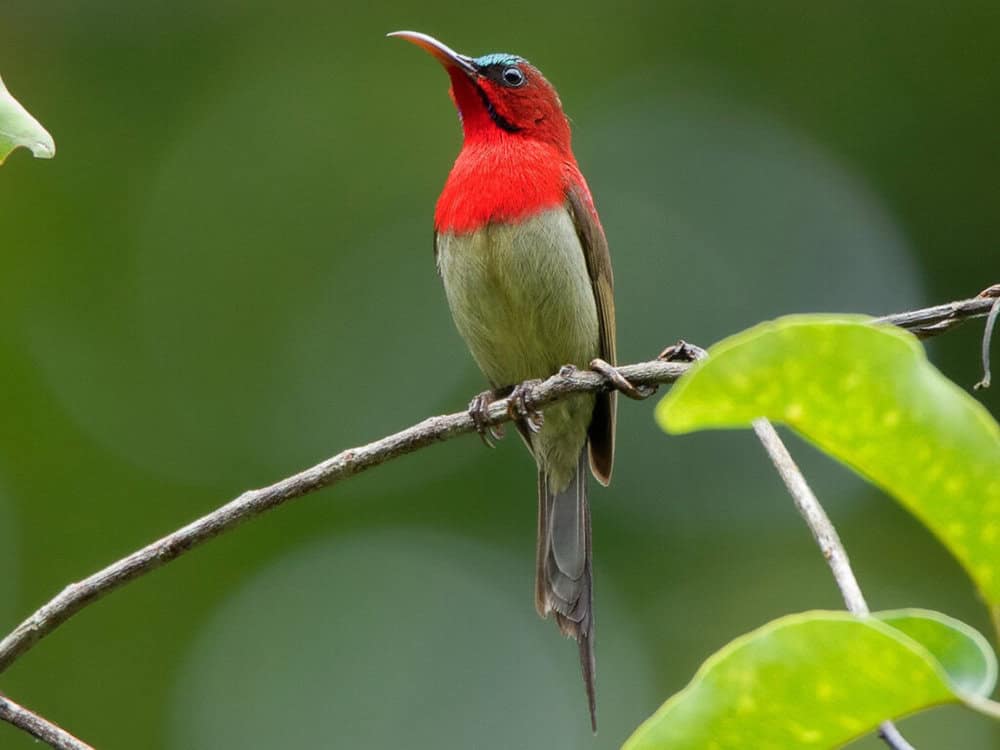
The crimson sunbird (Aethopyga siparaja) is a captivating and familiar sight in many gardens, darting from flower to flower and showcasing its vibrant red feathers, shimmering blue cap, and distinctive “mustache.”
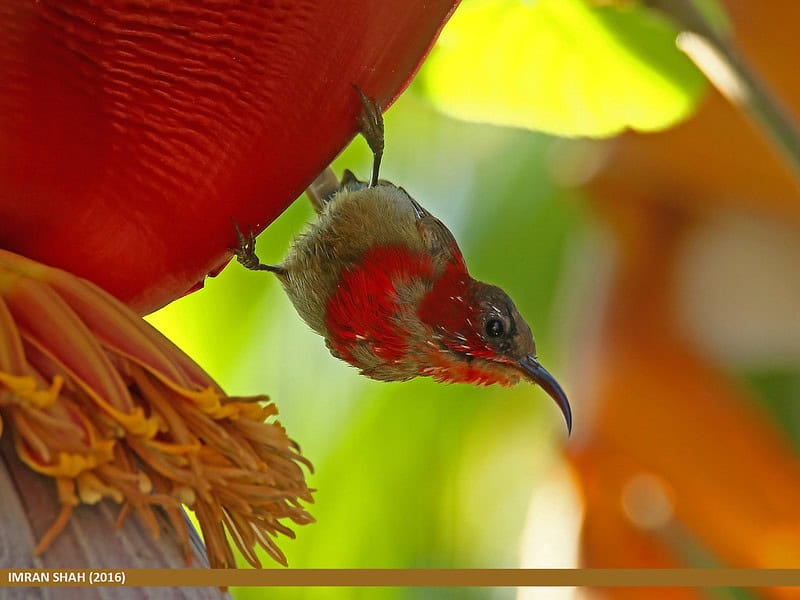
Belonging to the sunbird family, this bird is well-adapted to nectar feeding, with a medium-length, thin, down-curved bill and a brush-tipped tubular tongue. The adult male features bright red on the throat, chest, and sides, while maroon coloring adorns his back, and his belly is olive.

Adding to his unique look, the male has deep blue, mustache-like markings and a blue-green tail with white tips on the outer feathers. The adult female is less striking, with olive-green plumage on her back, a yellowish chest, and white-tipped outer tail feathers.
Crimson sunbirds are native to tropical South Asia, with a range extending from India and Nepal to Bangladesh, Myanmar, Indonesia, and Brunei. These birds primarily feed on nectar but will supplement their diet with insects during the breeding season to meet their protein needs and feed their young.
Both male and female crimson sunbirds work together to construct a purse-shaped nest covered in moss, though the female is responsible for lining it. The nest is often suspended from the underside of large fern fronds or the thin branches of low trees or shrubs.
A typical clutch contains up to three eggs, incubated mainly
by the female for about 18–19 days, after which the male helps feed the chicks. With a stable population and wide distribution, the crimson sunbird is not currently considered at risk.
Read More Birds
