
The 1956 Chevrolet Bel Air is a shining example of American automotive design. Known for its sweeping lines, chrome details, and distinctive two-tone paint jobs, this car is an emblem of the 1950s—when cars began transitioning from the conservative post-war look to the flashier, futuristic Space Age style.
The ’56 Bel Air combined innovative design with Chevy’s classic heritage, making it a beloved icon that resonates with car enthusiasts today.
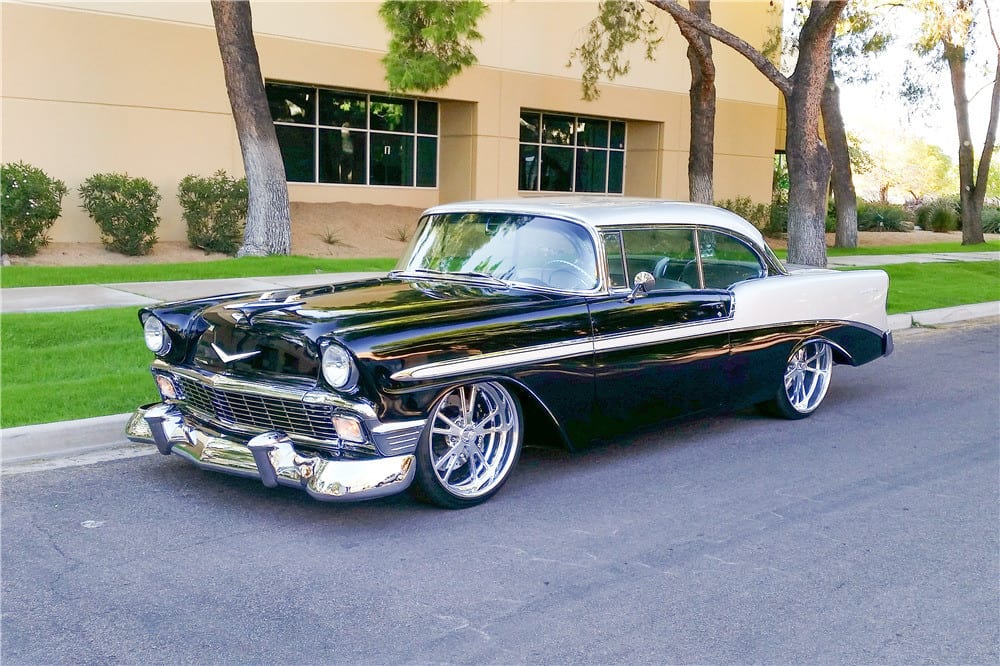
A Glimpse into the 1956 Chevrolet Bel Air Hardtop
The Bel Air model was introduced by Chevrolet in 1950, but it wasn’t until 1956 that the car truly stood out as the premium trim in Chevy’s full-size range.
The company marketed the 1956 Bel Air as a harmonious blend of style, performance, and elegance.
This year’s model featured an entirely new body with eye-catching styling upgrades, including chrome accents, anodized gold trim, and the iconic Bel Air script badging.
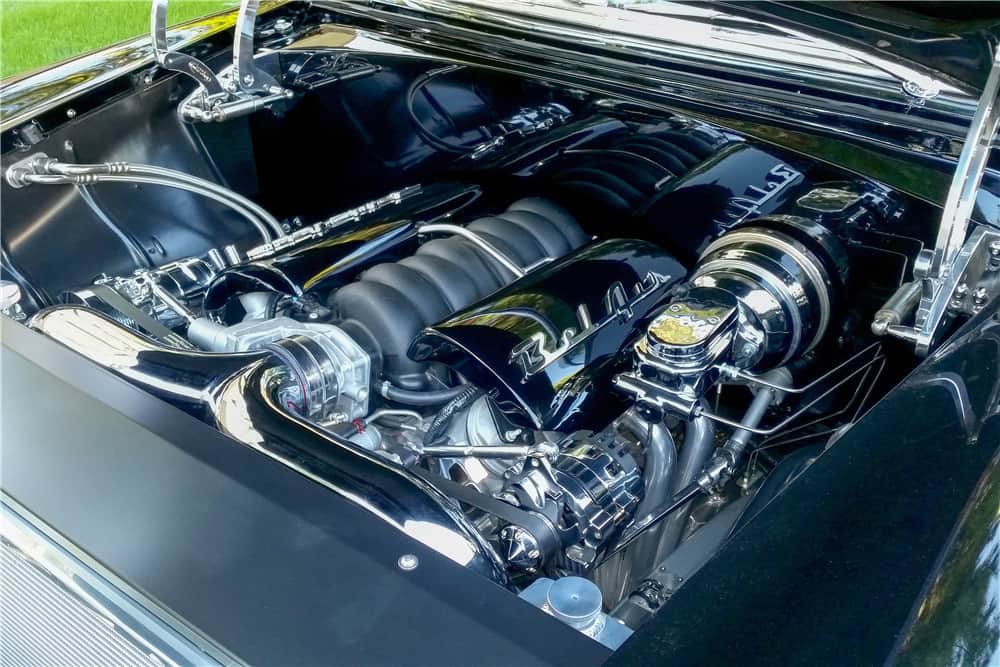
Under the hood, new V8 engines offered more power, appealing to the growing hot rod culture.
Of the more than 670,000 Bel Air models produced in 1956, the hardtop coupe became the most iconic, with its sleek, pillarless roofline and rakish rear profile.
The car was available in various body styles, including convertible, sedan, sports coupe, and wagon. However, the hardtop coupe is the quintessential ’56 Chevy shape that most people associate with the brand.
Distinctive Styling and Design Features
The exterior design of the 1956 Bel Air is characterized by its two-tone paint schemes, sweeping lines, and chrome details.
Two-tone paint became popular in the mid-1950s, and Chevrolet embraced this trend with the ’56 Bel Air.
Color combinations like India Ivory with Tropical Turquoise and Shadow Gray with blue flame were among the striking choices.
Chrome accents added a touch of luxury with a toothy chrome grille, chrome bumper bullets, and Bel Air lettering.
The innovative hardtop roof design eliminated the traditional B-pillar, allowing retractable windows that created a seamless and sleek profile.
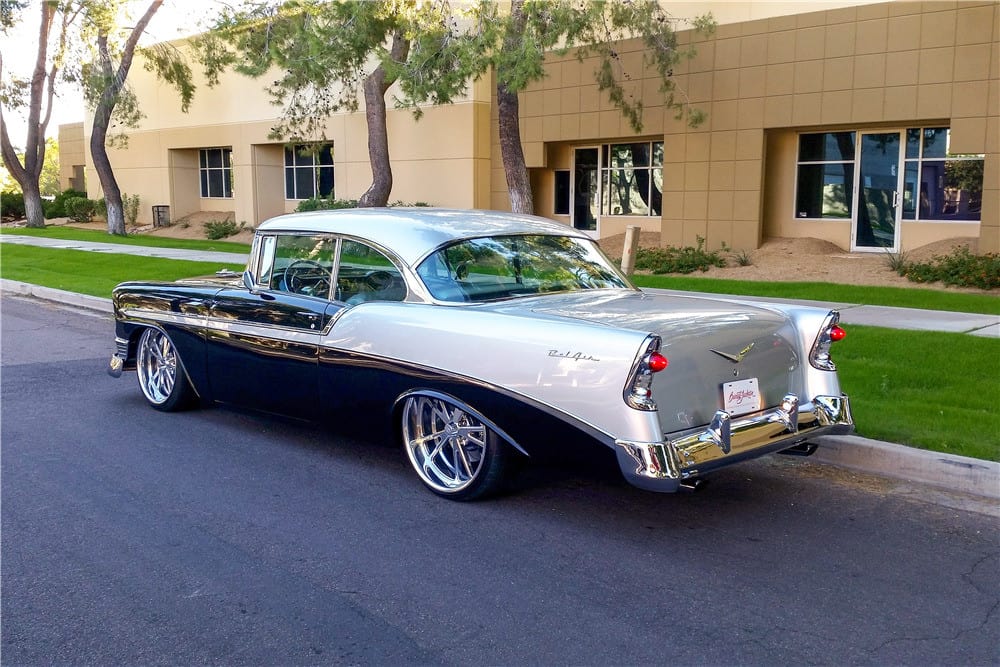
This design feature enhanced the car’s aesthetic appeal and contributed to its unique identity.
Interior Details and V8 Power
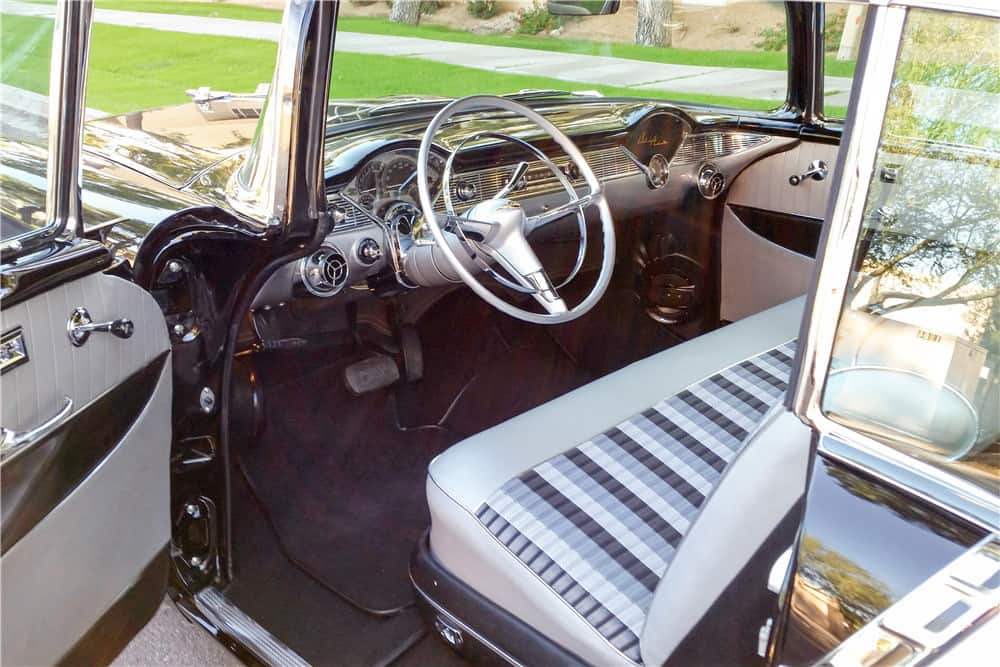
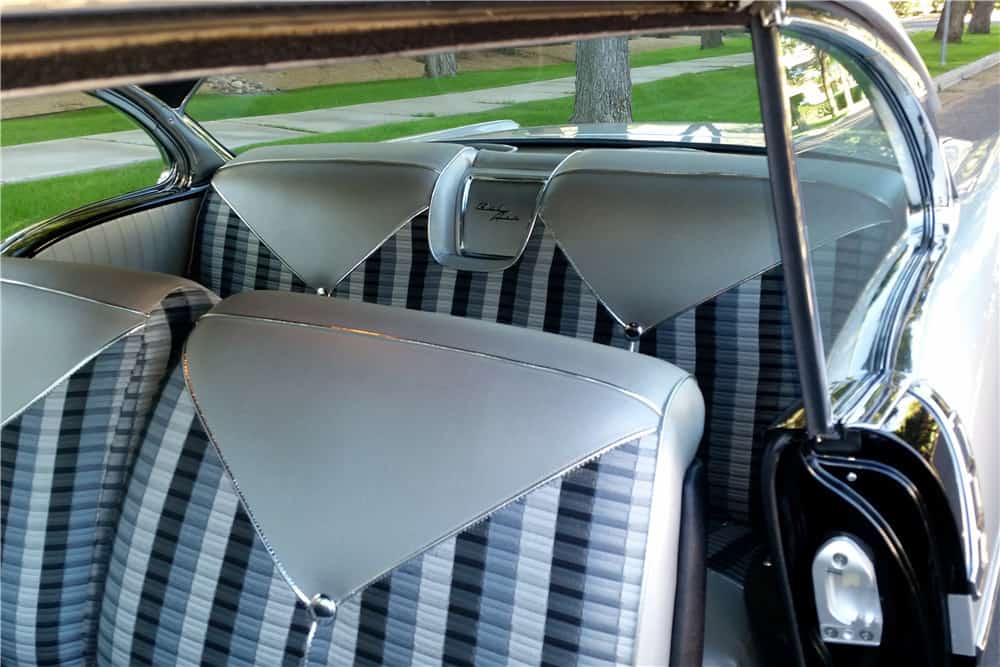
Inside, the 1956 Bel Air continued the theme of two-tone color schemes, with upholstery that matched the exterior paint.
High-quality materials and upscale touches like gold-threaded Bel Air script on the rear seat cushions added to the car’s premium feel.
Under the hood, the standard engine was the Blue Flame straight-six, but many buyers opted for the V8 engines, which provided improved performance and a more spirited driving experience.
The optional “Super Turbo-Fire” V8 offered 180 horsepower, delivering impressive acceleration for its time.
Why the 1956 Chevrolet Bel Air Became an Icon
The 1956 Bel Air became an icon for several reasons. It perfectly captured the spirit of the 1950s with its bold design, powerful V8 engines, and premium feel.
As Chevrolet’s flagship model, Bel Air played a significant role in redefining the brand’s image and sales success throughout the 1950s.
The car’s over-engineered construction and affordability made it accessible to a broader audience. In contrast, its unique styling and customizable platform made it a favorite among hot rodders and muscle car enthusiasts.
Owning and Maintaining a 1956 Chevy Bel Air Today
Many 1956 Chevrolet Bel Air models are still on the road today, thanks to their solid construction and timeless appeal.
For collectors and enthusiasts, finding the right car and maintaining it properly is crucial. A high-quality Bel Air in Concours condition can range from $20,000 to $60,000.
Parts availability is excellent, with suppliers offering a wide range of components for restoration and customization.
The 1956 Chevrolet Bel Air is a testament to classic cars’ enduring allure. Its unique design, powerful performance, and cultural impact have solidified its place in automotive history.
Whether you’re a car enthusiast, a collector, or simply someone who appreciates the beauty of classic automobiles, the ’56 Bel Air is a car that will continue to capture hearts for generations to come.
Read more Classic Cars News.
