
Bobcats are widely distributed across North America, but whether they may be hunted or trapped depends heavily on where they live. There is no nationwide US ban on recreational bobcat harvest, and the legal picture cannot be reduced to a simple claim that the species is either fully protected or freely hunted everywhere.
The International Union for Conservation of Nature classifies the bobcat (Lynx rufus) as Least Concern because the species is widespread and abundant overall. That broad conservation status does not mean every local population faces the same pressures, nor does it decide how individual states regulate hunting and trapping.
A state-by-state legal landscape
Wildlife management in the United States is largely administered by state agencies. In states that allow bobcat harvest, rules may include fixed seasons, licenses or permits, bag limits, mandatory reporting, tagging, or biological sampling. Kentucky, for example, requires hunters to hold a license and bobcat permit, while Virginia requires a harvested bobcat to be reported within 24 hours.

Other states take a different approach. California’s statewide bobcat hunting prohibition took effect on January 1, 2020, and trapping bobcats for fur is also prohibited there. California still allows limited removal under a depredation permit when a bobcat is harassing or killing pets or livestock. This distinction shows why “protected” does not always mean that every form of lethal control is prohibited.
Population health and ethics are separate questions
A population can be considered stable enough for a regulated harvest while people continue to oppose killing individual animals for recreation or trophies. Science can estimate abundance, reproduction, mortality, and sustainable harvest levels. It cannot, by itself, settle the ethical question of whether recreational killing should occur.
Supporters of regulated hunting and trapping often argue that licensed seasons can be managed without threatening the species as a whole and can provide data or revenue for wildlife programs. Critics respond that species-level abundance is not the only value that matters: each bobcat is a sentient wild animal, and nonlethal coexistence should receive greater priority.
Protection involves more than hunting rules
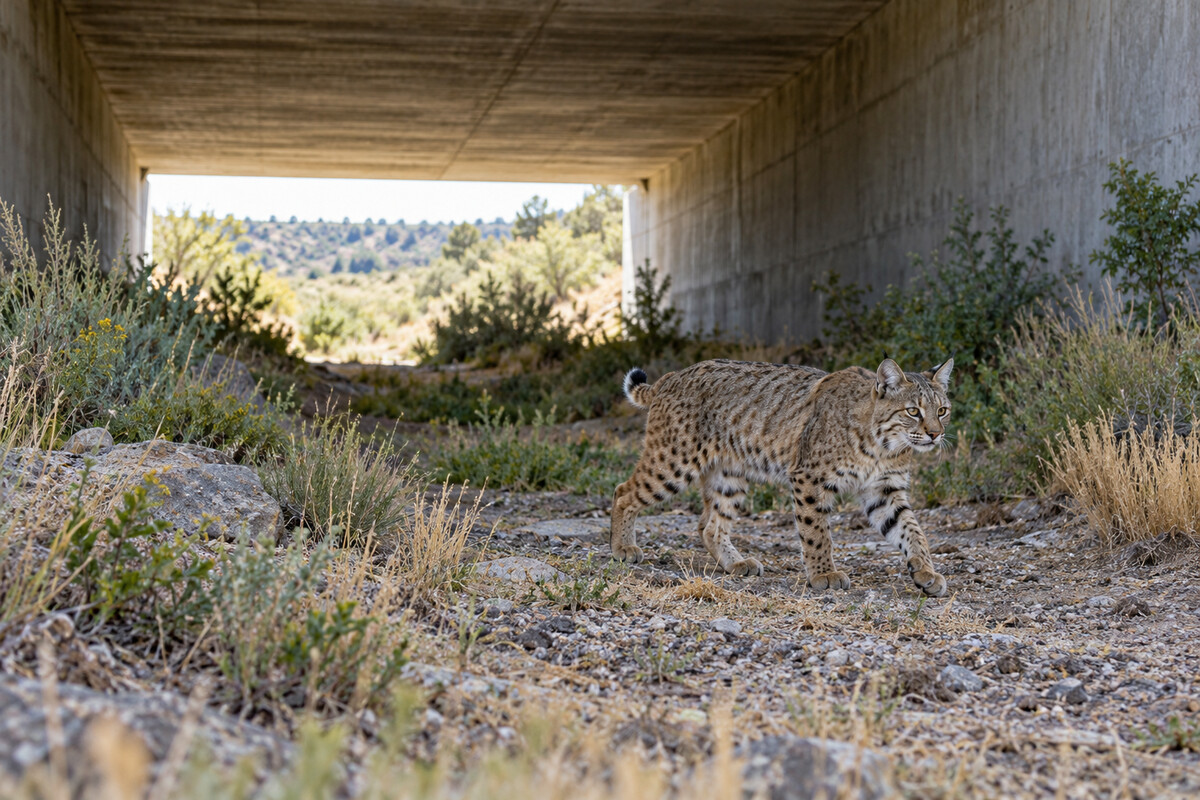
Bobcats also depend on connected habitat and safe movement through landscapes increasingly divided by roads and development. Wildlife crossings, habitat conservation, public education, secure livestock practices, and careful use of depredation permits can reduce conflict without treating every encounter as a reason to kill an animal.
The most accurate conclusion is not that bobcats are endangered everywhere or that hunting is harmless everywhere. Bobcats remain common across much of their range, but laws and management goals differ sharply among states. Anyone evaluating a local hunt should check the current wildlife agency rules, population data, reporting requirements, and available nonlethal alternatives for that specific jurisdiction.
Sources
- IUCN Red List: Bobcat (Lynx rufus).
- California Department of Fish and Wildlife: Bobcat laws and regulations.
- Kentucky Department of Fish and Wildlife Resources: Furbearer hunting and trapping.
- Virginia Department of Wildlife Resources: Furbearer hunting regulations.
All illustrations in this article are AI-generated editorial or educational reconstructions. They do not depict a specific hunt, animal, or documented event.
